FOLLOW US ...
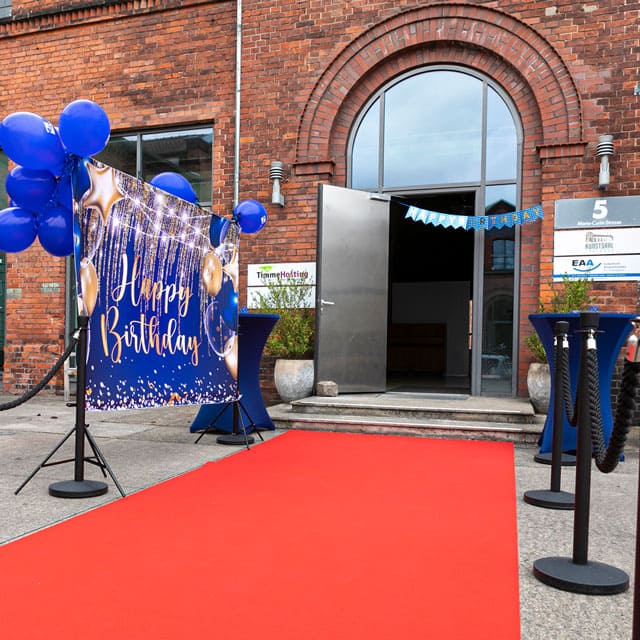
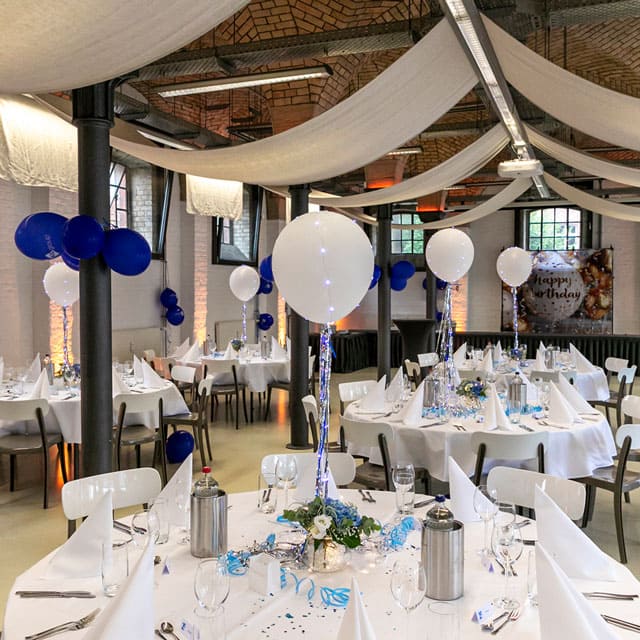
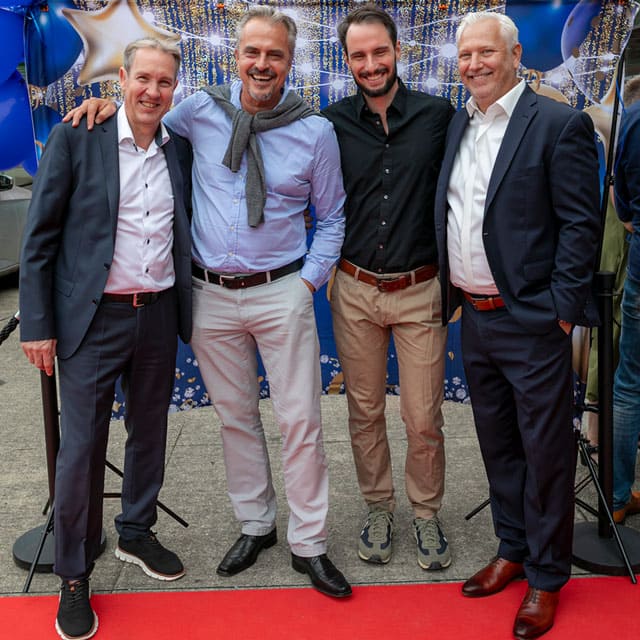
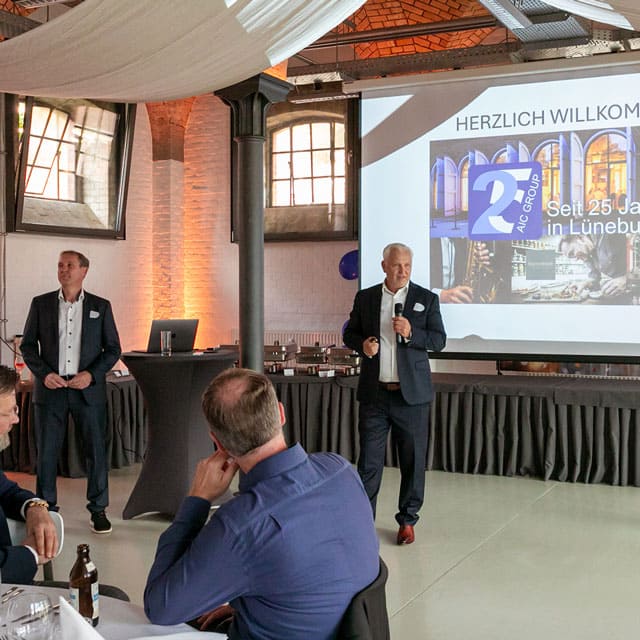
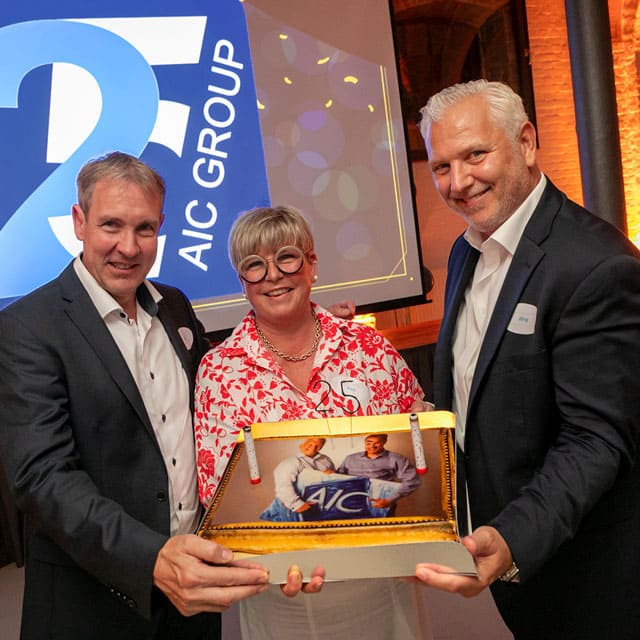
The AIC Group was founded 25 years ago in Lüneburg as Active Information Concept – at a time when business intelligence was not yet a term and people were talking about data warehousing. Dialog marketing was manual work and was managed by database experts, while marketing automation was seen more as a vision of the future than a tangible solution. Today, these topics have long been a reality and an integral part of digital marketing – so commonplace that it is hard to believe how revolutionary they once were. Translated with DeepL.com (free version)
However, this development has taken place over many years – a development that we as the AIC Group have actively accompanied and enriched with our ideas. Today, we operate our software products in the cloud, BI and data science have been supplemented by generative AI, and topics such as hyper-intelligence and big data have long since become reality. These and many other topics will continue to determine the direction and mission of the AIC Group in the coming years. The future remains exciting and continues to promise innovation and diversity.

Active Information Concept (AIC) is founded in Lüneburg in August 1999. The first projects are launched with a focus on consulting for data management and data analysis.
The partnership with MicroStrategy is established and remains an integral part of our range of services. The customer base is growing steadily and AIC is developing into a renowned partner for BI and marketing automation.
AIC grows, and the premises in Zeppelinstrasse become too small. A move to Johannes-Gutenberg-Straße offers more development potential, so that we still feel at home there today.
Our software development in the field of marketing automation is born. Our cloud-based offering for email marketing, push notifications and real-time workflow control is developing with a pioneering spirit.
The marketing of our Marketing Automation aisuite is launched and presented to the public at CeBIT in Hanover. As an integration partner of MicroStrategy, we present our solutions and hold talks with potential customers.
On the fourth day, we spoke to our first customer, which of course we didn’t know at the time. Not only is the number of employees increasing, but AIC is also developing due to the new areas of responsibility, resulting in new organizational units.
Our BI consulting was awarded the 5-year contract for the design and implementation of (micro)strategy in-house training for 20 locations of a leading retail group, from Portugal to Tokyo. Our BI expertise for the MicroStrategy platform and our competence in the retail environment were decisive for the contract.
We are celebrating our 10th anniversary as a training company. We started successfully back in 2001 with the training of our first employee in the field of application development.
Since then, we have regularly trained young people in this area. Some of them found working at the AIC Group so exciting that they are still a permanent part of the AIC team.
Cooperation is an important success factor for the AIC Group. We have been cultivating this with the local business development agency since 2012 in order to be able to implement innovative ideas with the support of the state of Lower Saxony and Europe in addition to our operational business.
Time and again, there are major projects where advice and financial support have produced great solutions. This joint approach pays off for us and helps us to bring new solutions to market time and time again.
brandeins and Statista select the best consultants in Germany, and the AIC Group is there for the first time. We receive the BEST CONSULTANT award for our work in the BI and marketing retail sector. Since then, we have been able to repeat this award 8 times.
We look for the right partner for CSA-certified e-mail dispatch and find one in Inxmail. We have been working very successfully with Inxmail since the beginning and are pleased to have a very reliable partner at our side to this day. In 2024, we will have achieved gold partnership with Inxmail and look forward to many more years of partnership together.
We have already written 20 years of company history, which we celebrated in style with a company outing to Sankt Peter-Ording. As northern lights, sailing is part of our DNA. That’s why the mottos of the event were beach sailing and buggy surfing.
That was really something different, as you only really know sailing with water under your keel. Great fun for everyone and a fantastic shared experience.
Every year we have a summer and a Christmas event. This year’s summer event focused on physical coordination. The entire team took part in a small golf tournament at Escheburg Golf Club.
After an extensive breakfast, the three best AIC golfers were determined in pitching, driving and putting and the trophies were awarded at the barbecue.
Vor einigen Monaten haben wir bei der AIC Group GmbH begonnen, intern einen KI-Agenten aufzubauen. Nicht als formales Pilotprojekt. Nicht mit externer Agentur. Nicht über ein IT-Ticket.
Dass das Thema gerade überall ist, war auch auf der OMR in Hamburg deutlich zu spüren: Keynotes, Podiumsdiskussionen, Pausengespräche. Was uns dabei auffiel: Viele Unternehmen wissen, dass sie sich mit Agentic AI auseinandersetzen sollten. Aber der Einstieg fühlt sich oft groß an. Nach IT. Nach Budget. Nach externer Lösung. Nach Zeit, die gerade fehlt.
Genau dieses Muster kennen wir. Und wir wissen inzwischen aus eigener Erfahrung: Es gibt einen anderen Weg.
Der Use Case: Content Creation. Konkret die Planung und Ausarbeitung unserer LinkedIn- und Instagram-Posts.
Warum genau dieser Use Case? Weil er niedrigschwellig ist. Marketingcontent ist öffentlich zugänglich – er enthält keine vertraulichen Informationen, keine sensiblen Daten. Man braucht kein aufwändiges Datenprojekt, um zu starten. Was man braucht, ist ein klares Vorgehen.
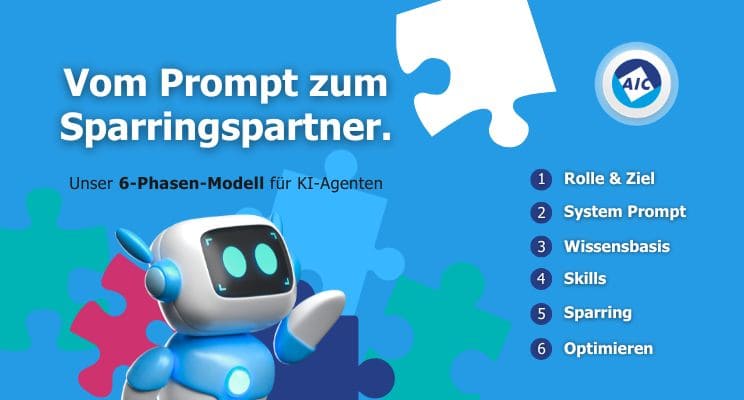
Ein funktionierender Agent ist kein Zufallsprodukt. Er entsteht durch Entscheidungen – und durch Iteration. Unser Prozess folgt sechs Phasen.
Phase 1 – Rolle & Ziel definieren
Wofür soll der Agent eingesetzt werden? Was sind seine Aufgaben – und was ausdrücklich nicht? Ohne diese Klarheit bleibt der Agent generisch.
Phase 2 – System Prompt entwickeln
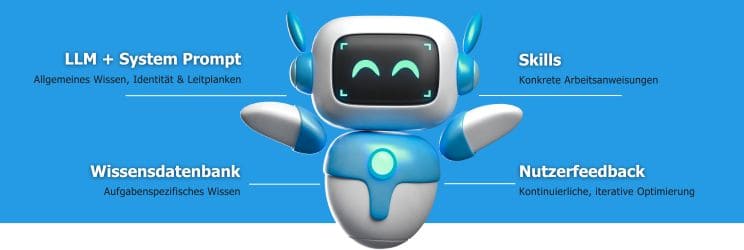
Der System Prompt ist das Herzstück. Er definiert Kontext, Rolle, Tonalität, Arbeitsweise und Qualitätsansprüche. Er macht den Agenten nicht kreativ – er macht ihn verlässlich.
Phase 3 – Wissensdatenbank aufbauen
Ein Agent ist nur so gut wie das Wissen, das ihm zur Verfügung steht. Wir haben dafür strukturierte Dokumente erstellt: Positionierungsgrundlagen, Sprachregeln, Designvorgaben, Redaktionspläne.
Drei Typen von Quellen haben sich dabei bewährt: strategisch-fachliche Dokumente, Stil- und Formatvorgaben sowie Planungsunterlagen.
Wissen schlägt Prompt-Länge.
Phase 4 – Skills entwickeln
Für wiederkehrende Aufgaben haben wir vordefinierte Arbeitsanweisungen entwickelt – sogenannte Skills. Sie sorgen dafür, dass der Agent konsistente, reproduzierbare Ergebnisse liefert, ohne jedes Mal neu instruiert zu werden.
Die Wissensdatenbank liefert das Was und Warum, der Skill das Wie.
Phase 5 – Arbeiten mit dem Agenten
Ein Agent ist kein Texter. Er ist ein Sparringspartner.
Dialog statt perfekter Prompts. Feedback statt Neuanfang.
Wer so arbeitet, kommt schneller zu besseren Ergebnissen.
Phase 6 – Kontinuierlich optimieren
Jeder falsche Output ist eine Lernchance. Die Optimierungsschleife – Fehler erkennen, Ursache identifizieren, nachschärfen – ist entscheidend für die langfristige Qualität.
Jeder falsche Output macht den Agenten besser.
In Gesprächen mit anderen Unternehmen – und beim Besuch von KI-Anbietern, die uns ihre Lösungen vorstellen – beobachten wir dasselbe Muster immer wieder.
Viele Anbieter bauen Oberflächen, die genau das zugänglich machen, was einen Agenten ausmacht: System Prompt, Wissensdatenbank, vordefinierte Arbeitsanweisungen. Dahinter steckt ein Sprachmodell, ergänzt um Integrationen – in die Website, ins CMS, in bestehende Workflows.
Das ist kein schlechter Ansatz. Aber er löst eine Herausforderung nicht: Den Unterbau sauber aufzubauen.
Was soll der Agent wissen? Wie soll er kommunizieren? Welche Aufgaben soll er reproduzierbar erledigen? Diese Arbeit bleibt immer. Egal ob mit eigenem Agenten oder mit einem Dienstleister.
Genau das hat unsere Entscheidung bestätigt: Wir bauen den Unterbau selbst. Nicht weil wir Tools ablehnen – sondern weil wir verstehen wollen, was einen guten Agenten ausmacht. Und weil dieses Wissen wiederverwendbar ist. Für den nächsten Use Case. Und den übernächsten.