News
about us!
Find out about our current topics in marketing automation and business intelligence.
AIC Group – News
As an established consulting and software company, we are continuously developing our services and products for you in order to respond to current changes and trends in the best possible way.
Find out about developments in our company and our four core competencies: business intelligence, marketing automation, content creation, and customer insights.
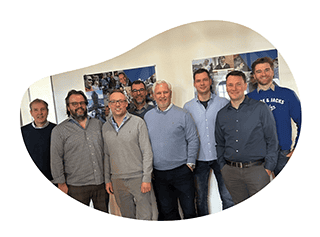
Our CEO masterminds group met again here in Lüneburg.
A confidential exchange format at management level – with the aim of jointly classifying current issues in business, science, and politics and learning from each other.
This time, the focus was on one of the key management issues for 2026: How can AI agents be used sensibly and responsibly to optimize business processes?
This is a topic with great potential—but also with strategic, organizational, and technological challenges. We presented the AIC perspective and approach and used a clear “recipe” to show how companies can proceed in a structured and practical manner—beyond hype and individual solutions.
The conclusion: valuable insights, open discussions, and concrete takeaways for the respective corporate context.
New name, proven partnership between AIC Group and (Micro)Strategy!
As a leading German BI consulting company, we are delighted to welcome MicroStrategy's rebranding to Strategy. This step, which was completed in February 2025, underscores the company's expanded strategic focus on artificial intelligence (AI) and Bitcoin.
Strategy remains a major provider of business analytics software. This realignment offers our customers unique opportunities to benefit from the most transformative technologies of the 21st century. We look forward to the upcoming developments.
The AIC Group was founded 25 years ago in Lüneburg under the name Active Information Concept – at a time when business intelligence was not yet a familiar term and people talked about data warehousing.
At that time, dialogue marketing was still implemented manually by specialists in the field of database marketing, while marketing automation was considered more of a vision for the future than a feasible solution. Today, however, all these technologies are firmly established and seem so natural to us that it is hard to imagine them ever having been any different.
Customers at heart, data in focus: How ROSSMANN is taking customer engagement to the next level with AI and marketing automation.
An important key marketing factor in retail today is the automation of customer interactions. The intelligent use of company data is crucial to success in this area. ROSSMANN has proven that customer engagement can be taken to a new level through the targeted integration of data, AI, and marketing automation.
In this recording of the master class at OMR 2024, you will learn about the success factors from the project. This will give you a comprehensive overview of the entire process, from the original strategy to the technological implementation and the actual added value for customers. Discover how ROSSMANN is redesigning the customer experience and setting new standards. This masterclass took place on May 7, 2024, as part of OMR 2024.
The world of marketing automation is vast and full of exciting possibilities. Just a few years ago, it was mainly about sending emails, but now the spectrum goes far beyond that. Topics such as artificial intelligence and the complete personalization of customer dialogues are particularly in focus.
Together with other tool providers, we discussed the most important questions surrounding this exciting topic at a Tool Talk organized by OMR Reviews. On top of that, there were valuable tips to help you get started with marketing automation, as well as an outlook on the most important trends.
This Tool Talk is an excellent addition to our successful OMR Masterclass with ROSSMANN on the topic of “How ROSSMANN is taking its customer engagement to the next level with AI & marketing automation.”
Latest news in March 2024 – AIC Group remains one of the best management consultancies in 2024.
For the ninth time now, brand eins and Statista have identified the best management consultants in Germany. Out of more than 19,000 companies, the AIC Group has made it into the top consulting firms for the consumer goods and retail sectors in the field of CRM. Thank you very much for your trust.
We are proud to have received this award for the ninth consecutive year, including in 2024.
Vor einigen Monaten haben wir bei der AIC Group GmbH begonnen, intern einen KI-Agenten aufzubauen. Nicht als formales Pilotprojekt. Nicht mit externer Agentur. Nicht über ein IT-Ticket.
Dass das Thema gerade überall ist, war auch auf der OMR in Hamburg deutlich zu spüren: Keynotes, Podiumsdiskussionen, Pausengespräche. Was uns dabei auffiel: Viele Unternehmen wissen, dass sie sich mit Agentic AI auseinandersetzen sollten. Aber der Einstieg fühlt sich oft groß an. Nach IT. Nach Budget. Nach externer Lösung. Nach Zeit, die gerade fehlt.
Genau dieses Muster kennen wir. Und wir wissen inzwischen aus eigener Erfahrung: Es gibt einen anderen Weg.
Der Use Case: Content Creation. Konkret die Planung und Ausarbeitung unserer LinkedIn- und Instagram-Posts.
Warum genau dieser Use Case? Weil er niedrigschwellig ist. Marketingcontent ist öffentlich zugänglich – er enthält keine vertraulichen Informationen, keine sensiblen Daten. Man braucht kein aufwändiges Datenprojekt, um zu starten. Was man braucht, ist ein klares Vorgehen.
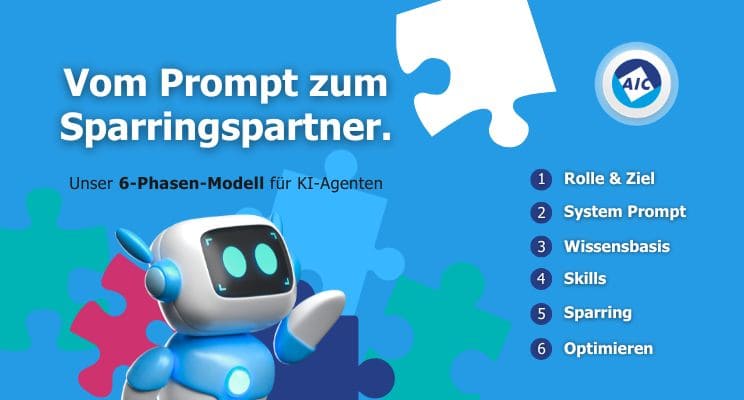
Ein funktionierender Agent ist kein Zufallsprodukt. Er entsteht durch Entscheidungen – und durch Iteration. Unser Prozess folgt sechs Phasen.
Phase 1 – Rolle & Ziel definieren
Wofür soll der Agent eingesetzt werden? Was sind seine Aufgaben – und was ausdrücklich nicht? Ohne diese Klarheit bleibt der Agent generisch.
Phase 2 – System Prompt entwickeln
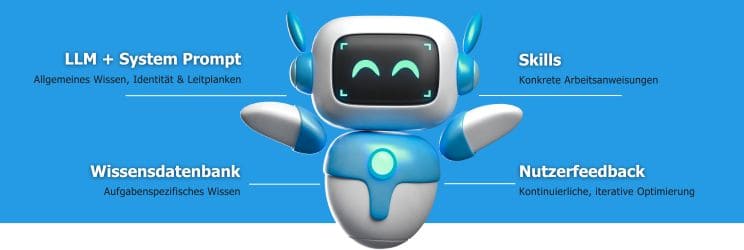
Der System Prompt ist das Herzstück. Er definiert Kontext, Rolle, Tonalität, Arbeitsweise und Qualitätsansprüche. Er macht den Agenten nicht kreativ – er macht ihn verlässlich.
Phase 3 – Wissensdatenbank aufbauen
Ein Agent ist nur so gut wie das Wissen, das ihm zur Verfügung steht. Wir haben dafür strukturierte Dokumente erstellt: Positionierungsgrundlagen, Sprachregeln, Designvorgaben, Redaktionspläne.
Drei Typen von Quellen haben sich dabei bewährt: strategisch-fachliche Dokumente, Stil- und Formatvorgaben sowie Planungsunterlagen.
Wissen schlägt Prompt-Länge.
Phase 4 – Skills entwickeln
Für wiederkehrende Aufgaben haben wir vordefinierte Arbeitsanweisungen entwickelt – sogenannte Skills. Sie sorgen dafür, dass der Agent konsistente, reproduzierbare Ergebnisse liefert, ohne jedes Mal neu instruiert zu werden.
Die Wissensdatenbank liefert das Was und Warum, der Skill das Wie.
Phase 5 – Arbeiten mit dem Agenten
Ein Agent ist kein Texter. Er ist ein Sparringspartner.
Dialog statt perfekter Prompts. Feedback statt Neuanfang.
Wer so arbeitet, kommt schneller zu besseren Ergebnissen.
Phase 6 – Kontinuierlich optimieren
Jeder falsche Output ist eine Lernchance. Die Optimierungsschleife – Fehler erkennen, Ursache identifizieren, nachschärfen – ist entscheidend für die langfristige Qualität.
Jeder falsche Output macht den Agenten besser.
In Gesprächen mit anderen Unternehmen – und beim Besuch von KI-Anbietern, die uns ihre Lösungen vorstellen – beobachten wir dasselbe Muster immer wieder.
Viele Anbieter bauen Oberflächen, die genau das zugänglich machen, was einen Agenten ausmacht: System Prompt, Wissensdatenbank, vordefinierte Arbeitsanweisungen. Dahinter steckt ein Sprachmodell, ergänzt um Integrationen – in die Website, ins CMS, in bestehende Workflows.
Das ist kein schlechter Ansatz. Aber er löst eine Herausforderung nicht: Den Unterbau sauber aufzubauen.
Was soll der Agent wissen? Wie soll er kommunizieren? Welche Aufgaben soll er reproduzierbar erledigen? Diese Arbeit bleibt immer. Egal ob mit eigenem Agenten oder mit einem Dienstleister.
Genau das hat unsere Entscheidung bestätigt: Wir bauen den Unterbau selbst. Nicht weil wir Tools ablehnen – sondern weil wir verstehen wollen, was einen guten Agenten ausmacht. Und weil dieses Wissen wiederverwendbar ist. Für den nächsten Use Case. Und den übernächsten.