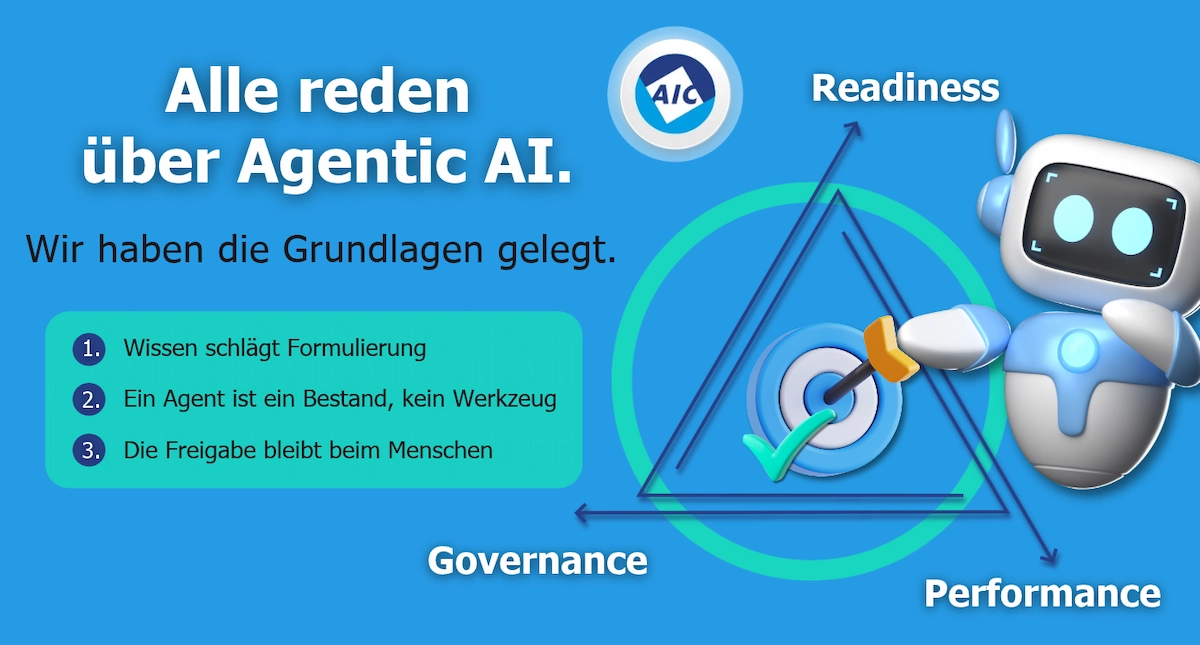
Agentic AI – We have laid the foundations.
A year of agentic AI in practice at AIC Group GmbH: three insights that have held up, three things we underestimated, and what our multi-agent pilot in software development has shown so far.
In the first article we described how we built an AI agent internally at AIC Group GmbH, with a clear use case, a structured six-phase model and one insight: an agent is not created once. It develops through use.
We deliberately kept phase 3, the knowledge base, short there. Today we go one step deeper.
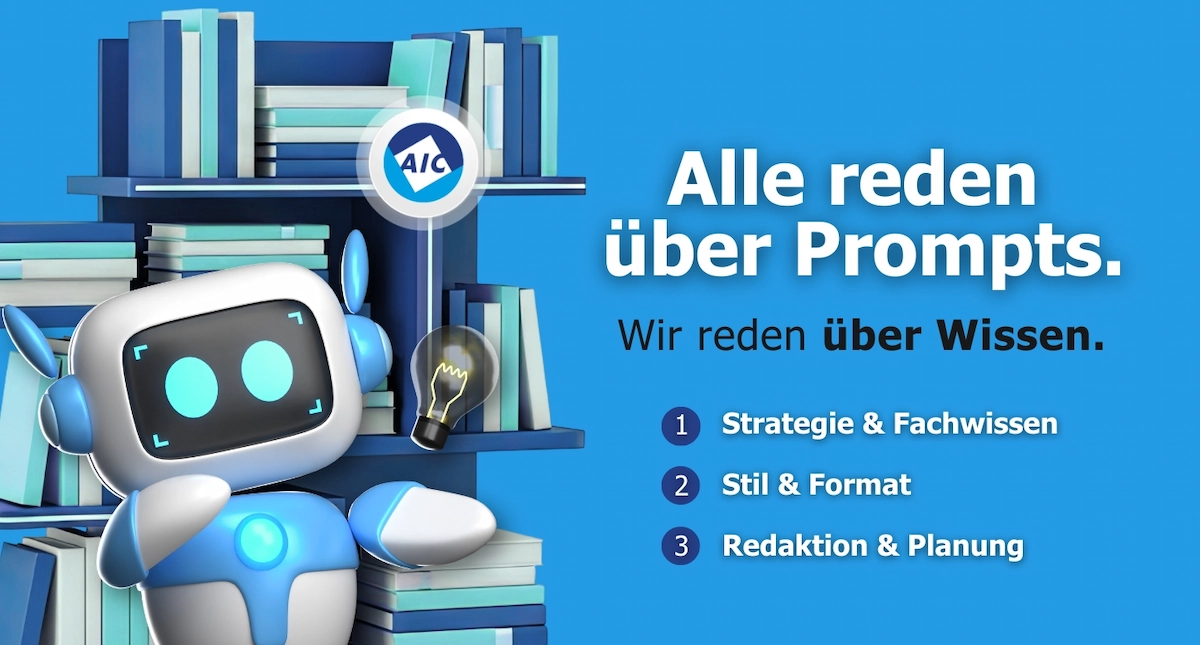
In practice we see the same pattern again and again: teams invest a lot of time in wording the perfect prompt, and then wonder why the agent stays generic. The reason is almost always the same. The prompt is not the problem. It is the missing knowledge behind it.
A language model is general by nature. It knows no company language, no positioning, no quality standards, no editorial priorities. That is exactly what the knowledge base has to provide. Only then does a generic assistant become a reliable sparring partner.
Knowledge beats prompt length. That was one of our central insights, and it has been confirmed in every working session since.
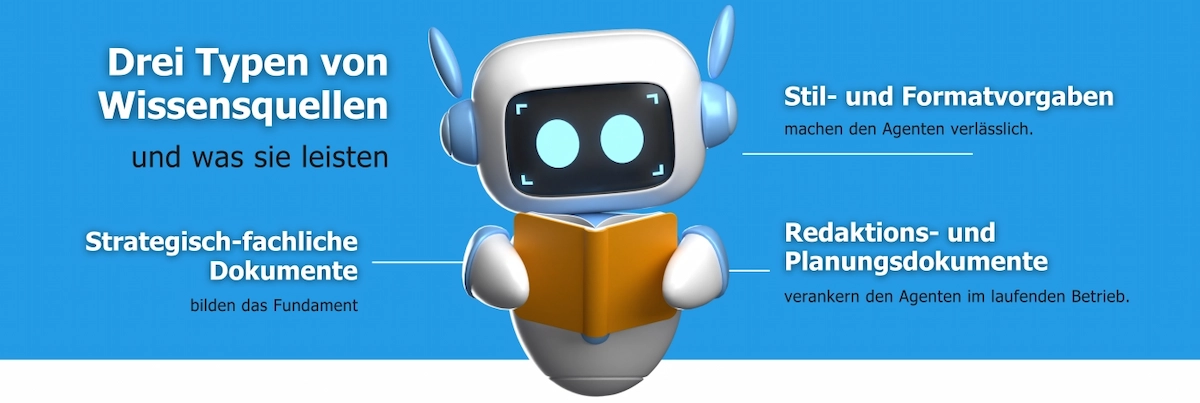
We have divided our knowledge base into three types. Not as a formal concept, but because this structure emerged in practice.
Strategic and subject-matter documents
form the foundation. They describe who we are, what we offer, how we position ourselves and which topics we stand for externally. Without this foundation the agent’s choice of topics stays arbitrary: it cannot take an AIC perspective because it does not know it.
Style and format guidelines
make the agent reliable. They describe how we communicate: tone, language, structure, what we avoid. An agent that knows the content but not the style produces texts that don’t feel like us. These documents close exactly that gap.
Editorial and planning documents
anchor the agent in day-to-day operations. Current planning, topic priorities, what is in progress right now: this knowledge makes the agent context-aware. It knows not only who we are, but also where we stand at the moment.
This is the point we underestimated most: a knowledge base is not a one-off project. It is a living system.
When our positioning evolves, the knowledge has to follow. When new topics come into focus, they need to be documented. When an agent keeps faltering in the same places, it is usually not a prompt problem but a signal that a knowledge gap needs closing.
This improvement loop is exactly phase 6 of the model. And it almost always starts in the knowledge base.
Building a knowledge base sounds like effort, and it is. But it is transferable. The three types that have proven themselves for us apply regardless of the use case. Whether content creation, customer service or internal process support: an agent always needs strategic knowledge, stylistic guard rails and an operational anchor.
If you build this groundwork properly, you have already laid the foundation for every further agent.
If you are thinking about what a knowledge base for your use case could look like: write to us. We are happy to share our experience.*
More articles…

A year of agentic AI in practice at AIC Group GmbH: three insights that have held up, three things we underestimated, and what our multi-agent pilot in software development has shown so far.

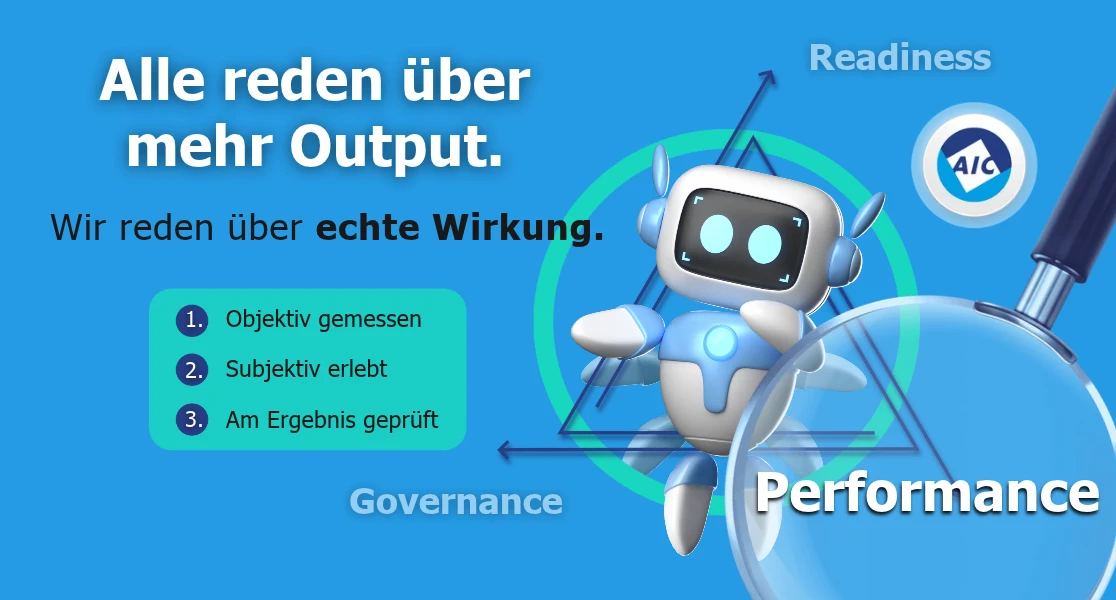
Are AI agents really making us faster, or does it just feel that way? At AIC Group GmbH we asked ourselves that question. Three questions for an honest check of an agent’s impact, and what you can still do without a baseline.

“Who signs this off?” sounds like the governance question. The more awkward one is: will anyone still know in six months what you agreed? Why governance takes shape while you build, not afterwards.
*Some articles are created using AI.