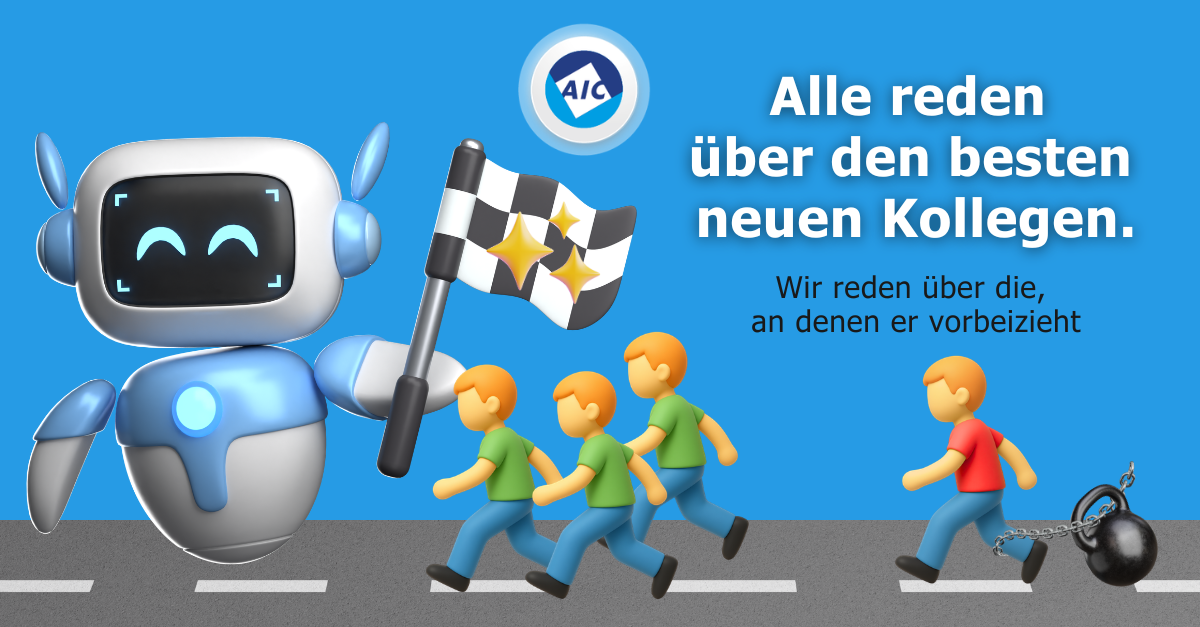
Everyone is talking about the best new colleague. We talk about the people it overtakes.
At the end of the last article we left one observation open, one that we ourselves can’t shake off.
The better our AI agent gets, the greater the temptation to work mainly with it. And less often with colleagues who take longer to get up to speed and whose feedback is not always easy to hear. Ourselves at AIC Group GmbH included.
That is uncomfortable. But it is real. And it is not a tool problem; it is a question of collaboration.
Why it happens so easily
Picture two counterparts.
One is always available. It answers immediately, stays calm, takes no correction personally and delivers at an increasingly high level. You can tell it three times in a row that something isn’t right without the mood turning.
The other is a person. Perhaps new to the subject, perhaps with a longer learning curve. They need time, sometimes patience, occasionally a second explanation. You have to phrase feedback more carefully. And the first answer may not quite land yet.
When pressure rises and time is short, the path of least resistance points fairly clearly in one direction. Nobody consciously decides against a colleague. You just decide, more and more often, for the faster counterpart. That is human. And that is exactly why it is delicate.
What gets lost
At first glance it looks efficient. The strongest people work with the strongest tool, and results come faster. What quietly disappears in the process only shows at second glance.
The colleagues who would benefit most from guidance get the least of it. Those who used to be trained, brought along and sharpened in conversation now sit a little more on their own. The learning curve, which was longer anyway, does not get shorter. It gets lonelier.
At the same time, knowledge moves to where it is shared least: into the dialogue between the strongest people and their agent. What used to be discussed in the team now happens in a silent chat window. The result is good. But it belongs to one person, not to the team.
And then there is the point that concerns us most. We like to say about our agent: it does not replace anyone, it takes expert load off people. A sparring partner, not an autopilot. But a sparring partner that crowds out human sparring is no longer one. Then we have not supported collaboration, we have replaced it, and taken a quiet step back towards automation. The opposite of what we stand for.
A question for the team, not the individual
That makes this an organisational question, not a personal one. Maturity is not something a single person has; it is a property of the team. And it erodes when the most experienced stop investing in the less experienced.
So appealing to individual good sense is not enough. It takes deliberate ground rules that protect human collaboration, precisely when the agent would be the more convenient route.
What we have resolved to do
The answer is not to push the agent back. It remains a good tool. The answer is to protect collaboration deliberately.
In concrete terms, that means three things for us.
We deliberately route some tasks through people, even when the agent would be faster: wherever working together is itself the value, not just the result.
We treat onboarding and mentoring as protected time, not as whatever is left once the AI work is done. Bringing others along is an achievement, even if it looks slower.
And we keep the agent as a shared resource. Good prompts, useful summaries, whatever we work out with it goes back to the team, so that knowledge stays collective and does not pile up in individual heads.
We are not finished with this ourselves. But we have started to look deliberately, and that is the first step.
What this means for others
The better AI agents get, the more the real work shifts to people. That was the point of the last article. This one shows the other side: the work does not just shift, it is distributed unevenly. And if you are not careful, at the expense of exactly the collaboration that holds a team together.
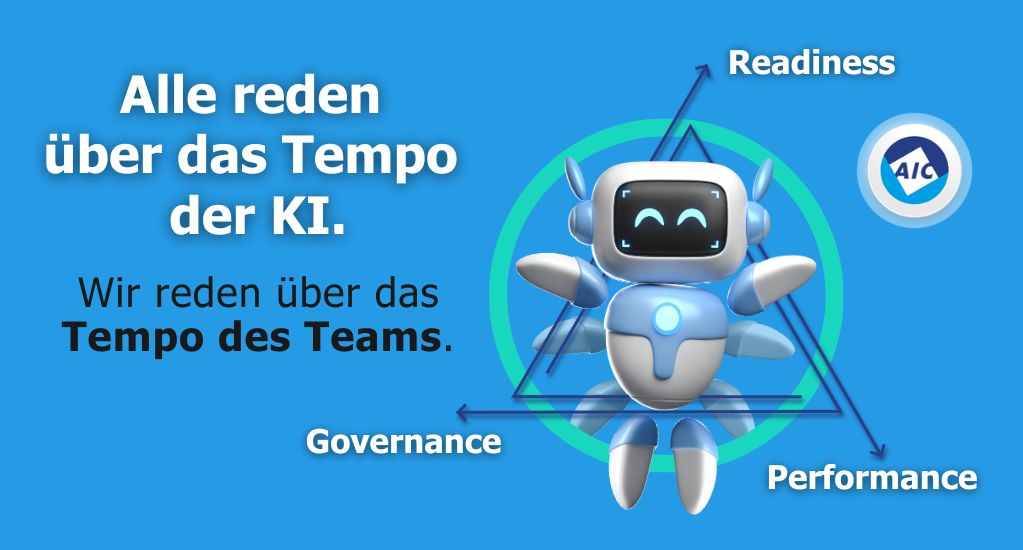
This is a question of the whole team’s maturity, which brings us to the first of the three prerequisites we have so far only mentioned in passing: readiness. The next part covers it in detail.
Do you see this in your organisation too, the strongest people drifting towards AI and collaboration between people suffering as a result? How do you deal with it? Write to us.